Language families
How Linguists Prove Two Languages Are Related
Regular sound correspondences, the comparative method, and why shared words alone prove nothing.
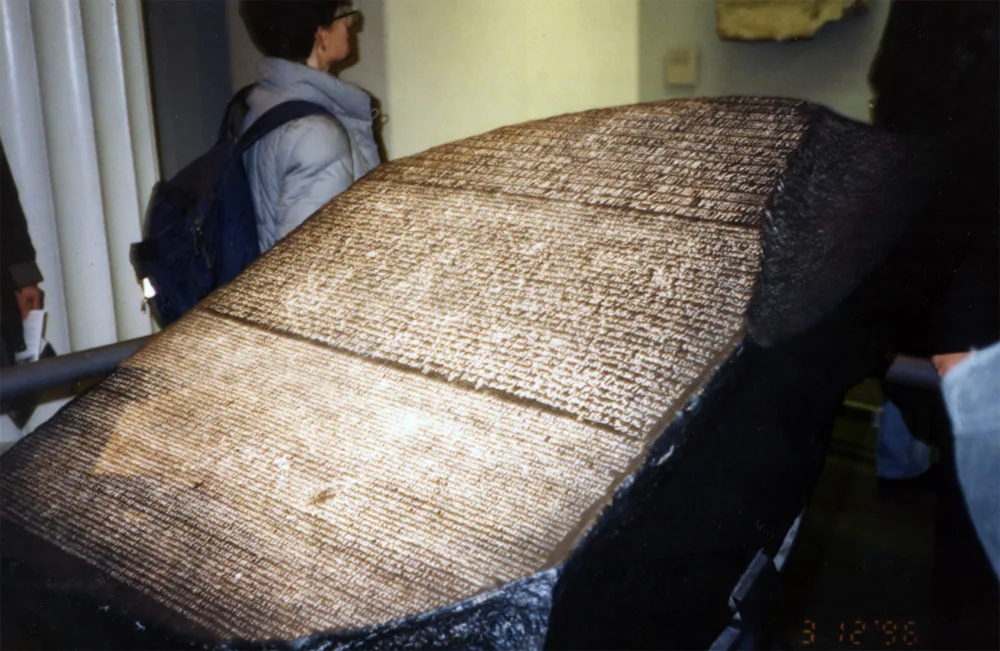
Linguists do not conclude that languages are related merely because a few words sound similar. Instead, they prove closer blood-ties exist by the linguistic practice known as the "comparative method", which identifies regular sound shifts across well-documented sets of vocab words.
The comparative method aims to reconstruct proto-languages - inferred common ancestors - by comparing modern related languages for systematic correspondences in their basic vocab. If the sound and meaning matches between words in multiple languages are many, regular, and not due to chance, the fit implies they share an ancestor.
Researchers then identify repeated sound-law-like matches that provide clues to each language's evolution from an ancestral form, excluding obvious borrowings. For instance, Greek initial 'th-' frequently parallels German and English initial 'z-', suggesting a reconstructed ancestral base.*.
However, shared words alone never prove common heritage. Occasional similarities may be latent universals, loanwords, or mere coincidences. To count, correspondences must recur across multiple branches and levels of the language's makeup.
Put differently, the crux of proof is whether the proposed links can reconstruct regular sound rules that explain their shared evolution from a deeper-originating form. This stands to rigorous internal checks - whether the one-to-one phoneme mappings are complete, whether they elegantly cover the data, etc..
Only explicable as feature of a shared parent.
However, a hardworking scientist showing it demonstrates care. The intuitive comparativist may give too much weight to easy parallels and gloss similarities that point to undigested parallels and gloss similarities that slip to undetectable parallels.
But when an entire pattern of consonants seeps reliably from Latin, Romance, and Icelandic across whole tone vocabularies, researchers can infer not only a common ancestor, but reach into its sound-resources. Comparing languages across well-shored families tilts a window into what languages record, how hinterlands live in people's minds.
While rarely decisively proving identity of ancestors, organising correspondences is the key calculus for testing hypotheses of Deep History. And while the comparative method restricts, it's the reason scholars can locate families like Romance, Greek, and Indo-European across continents.
But the key caveat remains - the comparative method has power only when a constellation of matches recurs; matching a few scattered words is not enough. An innocuous word fit from one language to another may not indicate generational coincidence. Benefit of their shared phoneme trees deeply nested by sound systems, the key measure:
Common heritage is affirmed not by flashy foreign phrases but by fit of patterns, theorized from basic words across languages, and reconstructed on systematic relays. Categorically consistent matches are the true badge of kinship.
Where this sits in the Register
Written by the Linguasphere desk. Classification data referred to here comes from the Linguasphere Register — see sources and attribution.