Writing systems
Which Languages Are Written Right to Left
The scripts involved, how numbers and embedded Latin behave, and what breaks in software.
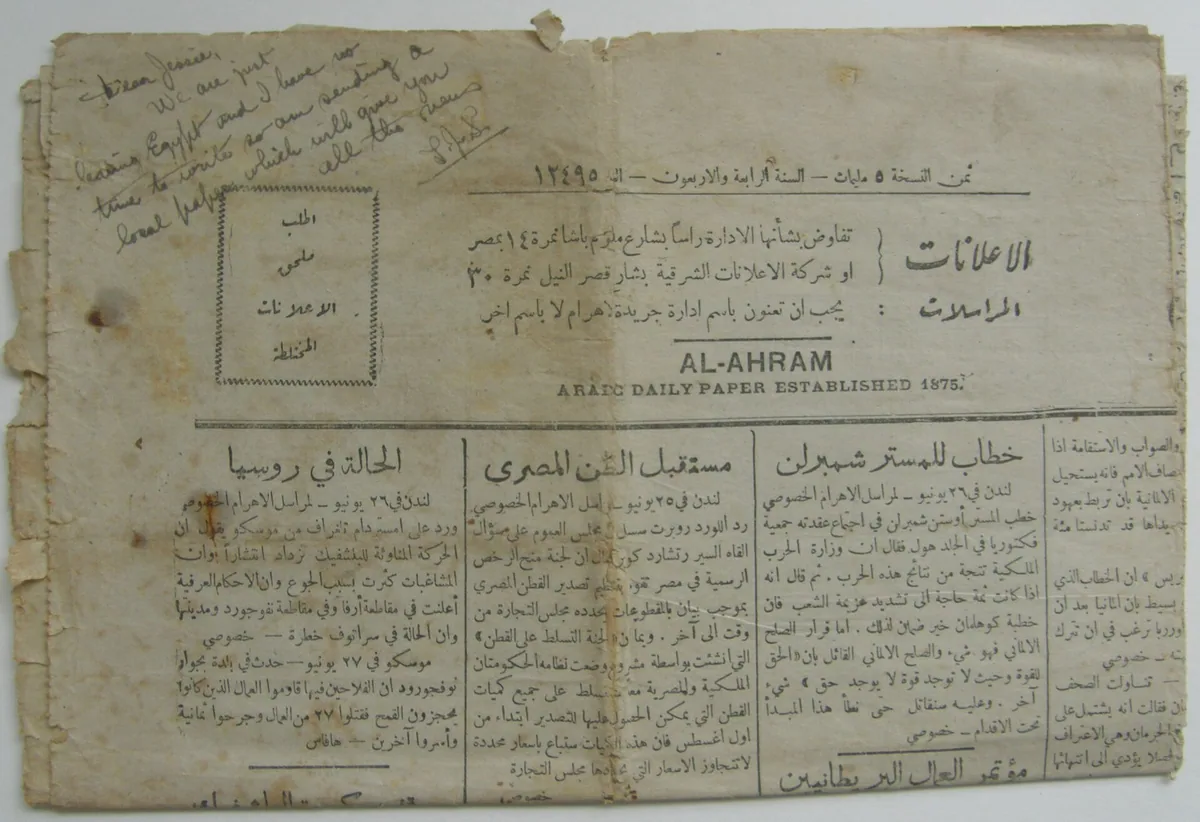
The concept of "right-to-left" text often misses the mark as a language attribute—it's actually a writing system property with practical consequences for display and digital text handling.
Arabic script is the prime example of a right-to-left system. The Unicode Standard, which governs text handling across operating systems, defines Arabic text as written in horizontal lines from right to left. Unicode-based software must use a sophisticated bidirectional algorithm to reorder the memory representation of a text passage, so that Arabic characters and punctuation display in the correct visual sequence.
Hebrew script shares the same horizontal right-to-left orientation, as described in the Unicode FAQ on bidirectional text handling as well as in orthography notes for the Hebrew writing system. But numbers, even when written in Arabic digits, follow the left-to-right reading direction. Unicode’s bidirectional algorithm documentation defines control characters that force left-to-right or right-to-left order in mixed-punctuation passages of Arabian, Hebrew, and other scripts. Roman / Latin letters that appear inside right-to-left text passages will also be read left to right, as explained in the W3C's Arabic and Persian layout guidelines.
This means that digital text involving Arabic or Hebrew must be context-aware and reordered if it is in a Latin-alphabet environment, such as a vertical Arabic Wikipedia article that contains subheadings in English. The مذكر (Romaji: mađkar) word in the Arabic orthography means "masculine" and is the canonical exemplar word for right-to-left text conventions but looks rather like "knвання" when displayed.
In software, this reordering is not straightforward— right-to-left text cannot simply be mirrored. Arabic quotation marks are placed on the left of the text they bracket, as are punctuation marks that lead or trail a phrase or segment. Arabic script must be reordered one character at a time; large numbers or embedded Roman text cannot use Arabic numerals within embedded text, as mixed use flips the layout in the wrong place. Text-direction handlers must implement the Unicode Bidirectional Algorithm, check for bidi control characters or document overrides, and reorder the display sequence accordingly. Layout rendering on the screen, and in multimedia files, preserves the base directional categorization for scripting elements in a mixed-language passage.
One reason the technical complexity is so consequential is that right-to-left text content is not restricted to Arabic and Hebrew alone. Thaana script, a descendant of the Arabic alphabet, is used in the Maldives, though administrative texts are typically written in Latin script.
Though the sources here focus on Arabic, Hebrew, Thaana, and Syriac, these account for most of the real-world right-to-left layout issues in digital and print typography. Historically, Khmer, Tibetan, and Japanese writing share similarities with right-to-left text, but are rendered as block vertical scripts or, in the case of Japanese, as widely mixed-directional passages of text that also use a right-to-left system.
The practical list:
Users who don't speak Brahmi or Sanskrit simply need:
Where organization is clearest: an endorsed list of Unicode scripts, with perhaps ISO 15924 for quick lookup on a desktop or mobile device.
Summary of What Matters:
Arabic and Hebrew are the main bidirectionally-right-minus-numerals, but Thaana script (DPV) also counts and has usage in the Maldives/Phoenix Islands areas.
The practical conclusion is that a reader must expect to use Unicode-compliant text-handling software to display text in Arabic or Hebrew, in order to maintain the proper orientations of scripts and numerals, as well as proper quotation marks and punctuation. Okay, you expected that, but still the constraint remains. Dealing with mixed-script text is even more complicated if fewer of the following display features are supported:
Mixed-script text handling (hopefully Unicode-aligned) Proper embedding or syllabic double consonant support Localization-aware punctuation or quotation marks Right-to-left-linear or horizontal scripts display features Controls for bidirectional order and reorder turns
Understanding the ancient roots of Khmer and the Arab derivative scripts supports a modern-day reading of script-based layout demands, which is likely best handled by a Unicode-compliant browser and modern software.
The diversity of unique, extant writing systems using RTL raises opportunities and challenges, not just nor in the digital realm; but in administrative or governmental and scholarly publication outputs, as well as academic and arts-oriented publishing environments; Unicode and of ISO 15924 will remain the principal tools for unifying the indoors and display of text.
Where this sits in the Register
Written by the Linguasphere desk. Classification data referred to here comes from the Linguasphere Register — see sources and attribution.