Language families
Hindi and Urdu: One Spoken Language, Two Written Ones
Why speakers understand each other in conversation but cannot read each other's newspapers, and where the vocabulary splits.
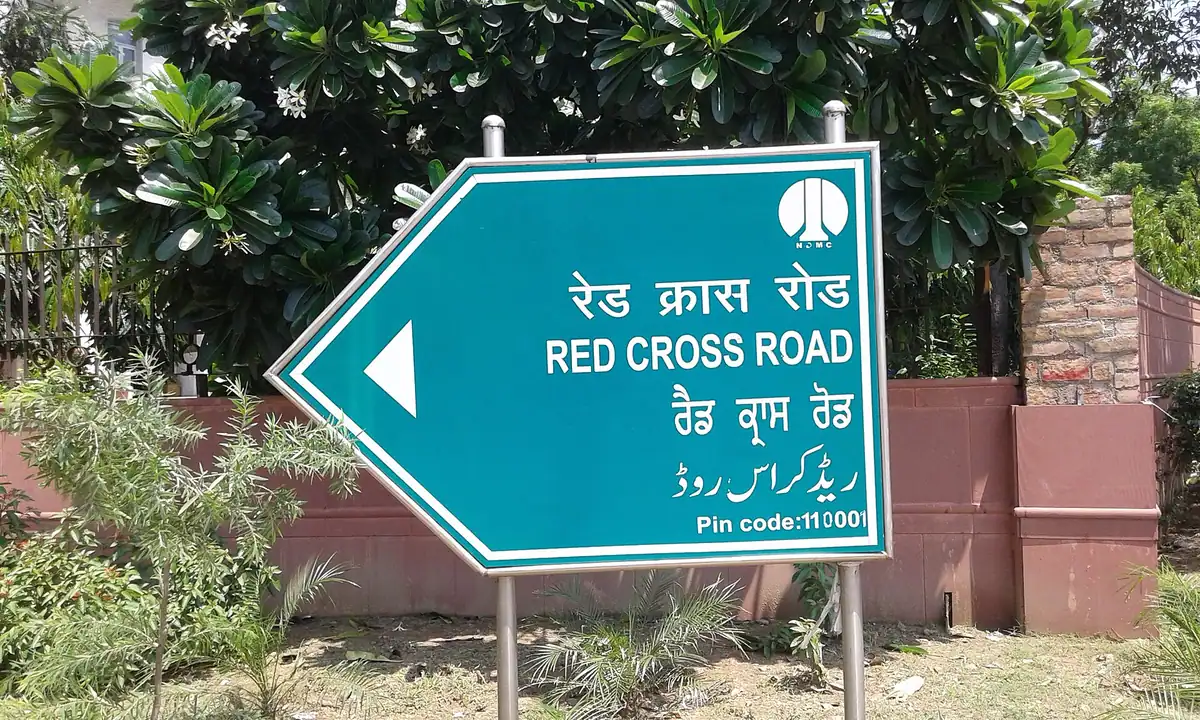
Hindi and Urdu speakers can understand each other with ease—until you put a newspaper in front of them. The relationship between Hindi and Urdu is like that of English and American: they may share the same basic vocabulary and grammar, but the reading and writing is different.
Shared Speech, Separate Page
Hindi and Urdu are "virtually the same language in spoken form." For speakers of either, conversation flows as smoothly as it would within a single language. This may sound counterintuitive, but it is simply the product of history. Hindi and Urdu have functioned as a shared lingua franca across a vast region for centuries. As a result, the vast majority of words used by speakers of either variety are the same. Mind you, this spoken similarity is mutual intelligibility, not total parity, especially when it comes to vocabulary.
The Script Divide
The most immediately apparent difference for many is simply script. In practice, Hindi uses Devanagari, a script that traces its roots back to Brahmi through Sanskrit, while Urdu uses a form of the Arabic script known as Nasta'liq. From a reader's point of view, one looks like a sibling of Marathi, Tagalog, or Western Tibetan, while the other looks like Sindhi or Persian.
Where the Vocabulary Splits
Get past the speaking and writing divide, and you'll find a third cultural layer: vocabulary. Here is where Hindi and Urdu diverge most visibly. Hindi draws heavily on Sanskrit, such that a standard Sanskrit lexicon appears much closer to modern Hindi than English is to Middle or Old English. Urdu, on the other hand, has been strongly influenced by Persian and Arabic—and not merely the Arabic of Scripture, but of everyday speech, like the Arabic of historical Iraq or Morocco.
But here is where most misunderstandings creep in: vocabulary choices between the two aren't as clear-cut as you might think. If Sanskrit and Arabic represent two ends of the vocabulary spectrum, most Hindi and Urdu speech is somewhere in the middle. Many common terms are borrowed and shared across both, with the only difference being in register. An Arabic loan may be inflected as Hindi, or vice-versa. In everyday communication, the differences are mere pinpricks in an overwhelming sea of shared vocabulary and grammar.
What Speakers Actually Share
So how can you know if you're doing Hindi or Urdu? It's not the words, or the letters, or the rules for verb conjugation, gender agreement, and case markers. For that, look at the history book: the two official standards diverged after the Indian subcontinent was partitioned in 1947.
For those unfamiliar with the languages, this may lead to the impression that all of Urdu is something especially different than most of Hindi. But the split is most visible only in specialized contexts, particularly in writing and vocabulary. Indian politicians make frequent use of Sanskrit loanwords, while in Pakistan, words of Arabic or Persian origin are common in The News and Dawn. But in everyday speech, the boundary between Hindi and Urdu is as visible as the line between Canadian English and Australian English.
What a Beginner Should Learn First
For the beginner, the choice between Urdu and Hindi depends on goals. This may be because the Arabic script is used in regions like Pakistan, where Urdu is the official language. Additionally, Urdu, as a language influenced by Persian and Arabic, may be more relevant for anyone with an interest in the language's historical and cultural context. On the other hand, for those focusing on India or the diaspora in Britain and the US, Devanagari may be a stronger fit.
Where this sits in the Register
Written by the Linguasphere desk. Classification data referred to here comes from the Linguasphere Register — see sources and attribution.