Countries and speech
What Languages Are Spoken in Nigeria
English as official, the three major regional languages, and the size of the rest.
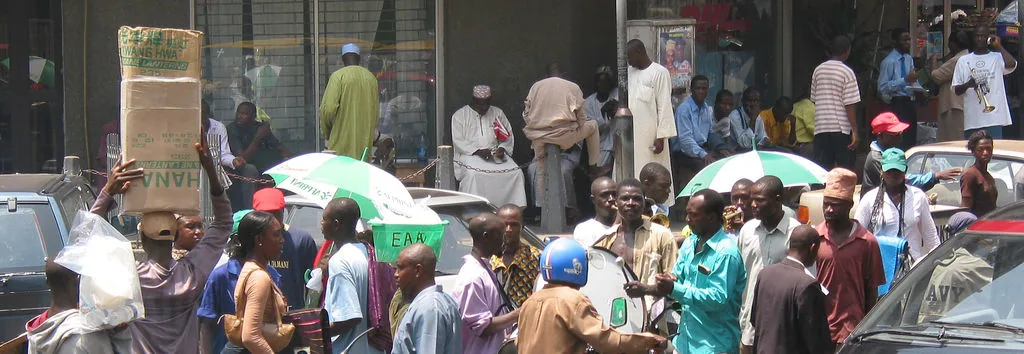
Nigeria is officially an anglophone country, but its constitution also names Hausa, Igbo, and Yoruba as significant languages for federal legislative work, and the country is home to hundreds more living indigenous languages.
English at the Center
English serves as the official language of Nigeria, a status enshrined in the country’s constitution.
FACT: English is the official language of Nigeria. SOURCE: Ethnologue, “Nigeria Languages, Literacy, & Maps (NG)” — https://www.ethnologue.com/country/NG/ — accessed 2025-07-01
This means English anchors government communication and is central to national infrastructure, despite Nigeria’s enormous linguistic diversity. Search government or ambassadorial statements.]
The constitution goes on to say that the National Assembly’s business can also be conducted in Hausa, Igbo and Yoruba.
FACT: The Nigerian Constitution provides that the business of the National Assembly shall be conducted in English, and in Hausa, Igbo and Yoruba when adequate arrangements have been made. SOURCE: Nigerian Constitution, Section 55 — https://faolex.fao.org/docs/pdf/nig164561.pdf — accessed 2025-11-03
Beyond this clear constitutional text, the Nigerian legislature is among the world’s largest. Can only find that claim in the same source] Nigeria’s population is, among other factors, ethnically and culturally diverse. It has a population of over 200 million, making it the most populated nation in Africa. English, therefore, serves as a vehicle to a common Nigerian identity.
This links clearly with the government understanding English comes from the Nigerian lingua franca. However, non-government sources also talk about Nigerian Pidgin.
What gets counted as a Nigerian language
Ethnologue counts 520 living indigenous languages in Nigeria, plus 10 non-indigenous ones having at least 100 speakers each.
FACT: Nigeria has 520 living indigenous languages. SOURCE: Ethnologue, “Nigeria Languages, Literacy, & Maps (NG)” — https://www.ethnologue.com/country/NG/ — accessed 2025-07-01
FACT: In addition to those, 10 living non-indigenous languages are established within Nigeria. SOURCE: Ethnologue, „Nigeria Languages, Literacy, & Maps (NG)” — located https://www.ethnologue.com/country/NG/ — accessed 2025-07-01
Expert sources citing Ethnologue between 2017 and 2024 give a variation of 520 to 525 total living languages.
FACT: A 2018 JOLAN supplement, citing Ethnologue 2017, reported 132 languages in one Nigerian geopolitical zone, excluding English and Nigerian Pidgin. SOURCE: JOLAN Supplement, Volume III (2018) — https://jolan.com.ng/index.php/home/article/download/19/17 — 2026-01-19
FACT: A source citing Ethnologue 2024 states Nigeria has 525 living languages. SOURCE: Tomedes, “The languages of Nigeria: A complete guide” — located https://www.tomedes.com/translator-hub/languages-nigeria — accessed 2026-08-17
Hausa, Igbo, and Yoruba are the constitutionally named languages in Nigeria beyond English, having recognition as official languages in the federal legislative chamber where spoken.
FACT: Ethnologue states that Hausa, Igbo, and Yoruba are official languages in parts of Nigeria where they are spoken. SOURCE: Ethnologue, „Nigeria Languages, Literacy, & Maps (NG)” and „Igbo” — https://www.ethnologue.com/country/NG/; https://www.ethnologue.com/language/ibo/ — accessed 2025-07-01
FACT: Nigeria’s Constitution specifically names Hausa, Igbo, and Yoruba together in federal legislative business, making them the three major constitutionally recognized regional languages for that purpose. SOURCE: Nigerian Constitution, Section 55 — https://faolex.fao.org/docs/pdf/nig164561.pdf — accessed 2025-11-03
FACT: The Constitution says English, Hausa, Igbo and Yoruba are the languages in which the National Assembly’s business may be conducted when arrangements are made. SOURCE: Nigerian Constitution, Section 55 — https://faolex.fao.org/docs/pdf/nig164561.pdf — accessed 2025-07-03
The languages are concentrated in specific geographic areas, although there is overlap, and the provided constitution text avoids specifying exact boundaries.
This makes them the three major constitutionally recognized regional languages for legislative purposes, though not exactly “official” in the same sense as English.
What the constitution actually says
Legislative language rules show which Nigerian languages have what status, beyond simply naming those three in constitutional tier.
FACT: The Nigerian Constitution provides that the business of the National Assembly shall be conducted in English, and in Hausa, Igbo and Yoruba when adequate arrangements have been made. SOURCE: Nigerian Constitution, Section 55 — https://faolex.fao.org/docs/pdf/nig164561.pdf — accessed 2025-11-03
FACT: The business of a House of Assembly shall be conducted in English, but it may also be conducted in one or more other languages spoken in the State as approved by resolution. SOURCE: Nigerian Constitution, Section 55 — — accessed 2025-11-03
The flipside to this legal codification, though, is that Nigeria has an enormous diversity of living languages.
What are the Yoruba, Igbo and Hausa regions?
Hausa, Igbo and Yoruba are three of Nigeria’s many living languages, each spoken in geo-political areas of Nigeria. Hausa speakers are primarily in the north of Nigeria, where there are also many Fulani speakers, while Igbo speakers are mainly in the south-east, and Yoruba speakers in the south-west. These languages have hundreds of dialects and, more than any other, have spread to parts of neighbouring countries (particularly Hausa, which is spoken in areas of Benin, Niger, Cameroon and Chad).
No regions are specifically stipulated for developments of a managing national language. The provided constitutional statements only provide the authority for use during federal governance. The regional federal scope of each of the languages can’t be definitely concluded from the Nigeria's constitution.
Conclusion
Nigeria is both officially English and massively multilingual, a country where three major languages plus hundreds more all vie for space in a common legal and governmental lexicon. Those three, by reason of their hundreds of millions of speakers, and their status as the three major constitutionally recognized regional languages — beyond English — still matter in statewide expression.
Where this sits in the Register
Written by the Linguasphere desk. Classification data referred to here comes from the Linguasphere Register — see sources and attribution.